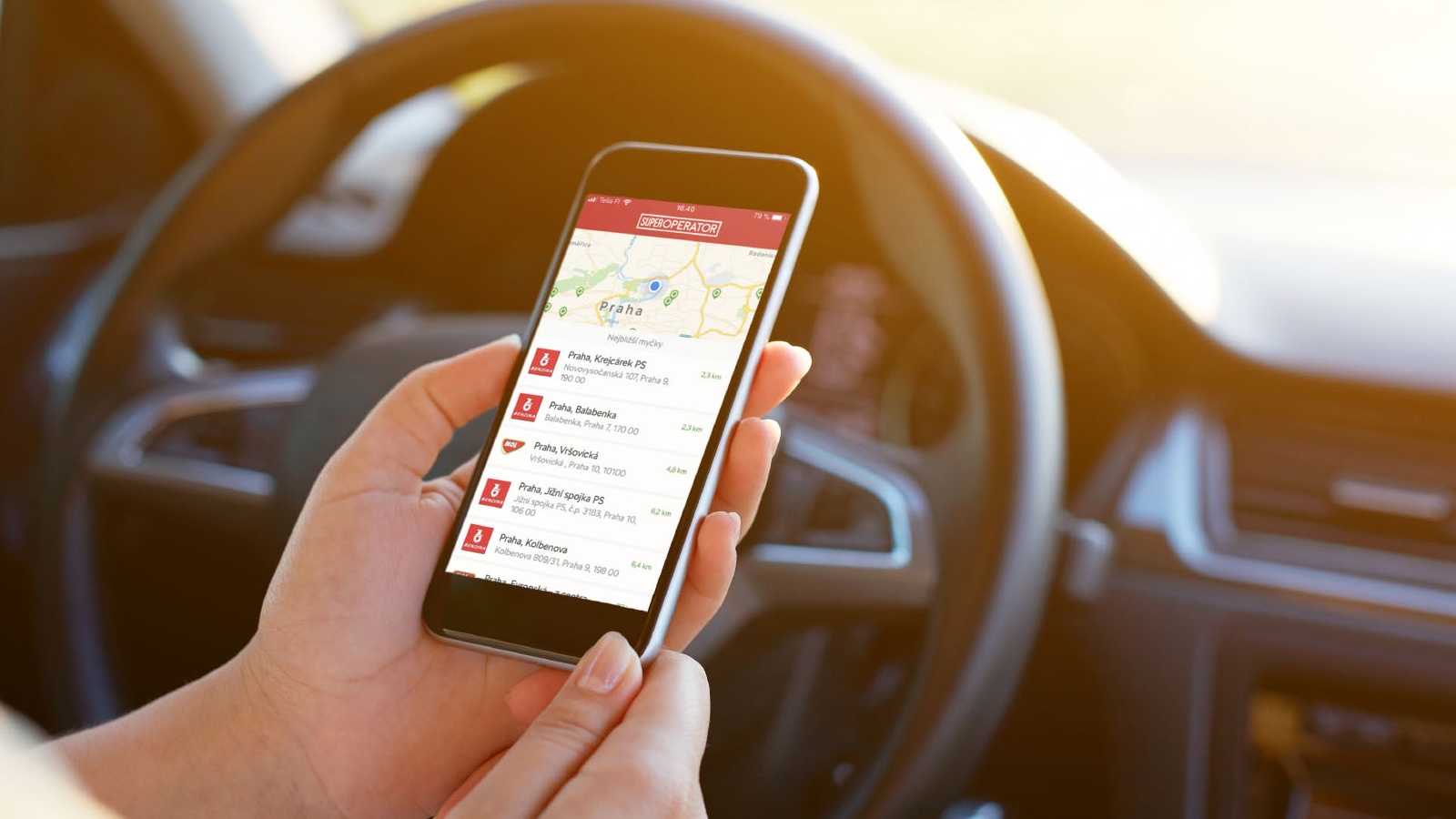
Car wash memberships are rapidly becoming the dominant payment model in the industry, fundamentally reshaping how operators run their businesses and how customers experience the service. What was once a simple transaction — pull up, pay, wash, leave — is evolving into an ongoing relationship built on convenience, value, and digital connectivity. This shift is driven by changing customer expectations, accelerating digital transformation across the service sector, and the compelling need for more predictable, sustainable revenue streams for car wash operators of all sizes.
The transition mirrors broader consumer trends seen in streaming, fitness, and food delivery: people increasingly prefer subscriptions over one-off purchases when the value proposition is clear and the experience is frictionless. In the car wash industry, that tipping point has arrived.
Modern digital car wash platforms, such as those developed by companies like Superoperator, have made membership-based models easier to implement, manage, and scale across multiple locations — removing the operational complexity that once made subscriptions feel out of reach for many operators. Understanding why this model is winning requires looking at the concrete benefits it delivers on both sides of the transaction.
1. Predictable Recurring Revenue: The Financial Case for Memberships
For any business, financial predictability is not just a convenience — it is a strategic advantage. Traditional car wash payment models are inherently volatile. Revenue depends on daily footfall, which fluctuates based on weather, seasons, local events, and broader economic conditions. A rainy week in winter can devastate weekly revenue; a dry summer might bring a temporary surge. This unpredictability makes planning difficult and growth even harder.
Membership models fundamentally change this dynamic. When customers commit to a monthly subscription, operators gain a reliable baseline of income that exists largely independent of day-to-day variability. The financial benefits are substantial and interconnected:
- Stable monthly income that provides a reliable revenue floor regardless of short-term fluctuations
- Improved cash flow forecasting, enabling more confident investment in equipment, staff, and expansion
- Reduced seasonality impact, as recurring billing continues even during periods of lower physical usage
- Better business valuation, since recurring revenue businesses are typically valued more favorably by investors and buyers than transaction-dependent ones
This predictability makes planning and scaling significantly easier. An operator who knows their monthly recurring revenue can make confident decisions about hiring, maintenance schedules, marketing spend, and new site development — decisions that would carry far more risk under a purely transactional model.
2. Better Value for Customers: Why Subscriptions Win on Economics and Convenience
From the customer’s perspective, the appeal of a car wash membership is straightforward: it costs less per wash and removes the mental friction of repeated payment decisions. Customers increasingly prefer “all-you-can-wash” or subscription-style services for reasons that go beyond simple economics.
- Lower cost per wash — the more frequently a member uses the service, the better the value compared to paying per visit
- Elimination of repeated payments — billing happens automatically, removing a small but real friction point from every visit
- Genuine convenience and simplicity — members don’t need to carry cash, remember a card, or make a spending decision each time
- Encouragement of more frequent use — because the cost feels “already paid,” members tend to wash their cars more often, which benefits both the customer’s vehicle and the operator’s throughput
This last point is particularly important. Once a customer is subscribed, washing the car becomes a frictionless, almost automatic decision rather than a transactional one. The psychological barrier of “is this worth paying for today?” disappears entirely. The result is a customer who visits more often, feels better served, and associates the brand with ease and value — a powerful combination for long-term loyalty.
3. Increased Customer Loyalty and Retention: Competing for Relationships, Not Just Visits
In a traditional per-wash model, every customer visit is effectively a new competition. A competitor opening nearby, offering a discount, or simply being more conveniently located can divert that customer immediately. There is no structural loyalty — only habitual convenience, which is fragile.
Membership models naturally reduce churn and build deeper loyalty because the dynamics of the relationship change fundamentally:
- Customers are financially committed — having already paid for the month, they have an active incentive to use the service they’re paying for
- Usage habits become routine — regular visits create behavioral patterns that are self-reinforcing over time
- Switching to competitors feels less necessary — the combination of financial commitment and established habit makes the decision to leave more deliberate and less impulsive
Instead of competing for every single visit, operators who embrace membership models compete for long-term customer relationships. This is a fundamentally different — and more sustainable — competitive position. Retaining an existing member is far more cost-effective than acquiring a new customer, which means that every month a member stays is compounding value for the business.
4. How Digital Systems Have Removed the Operational Barriers to Membership Management
One of the historical reasons car wash operators hesitated to adopt membership models was operational complexity. Managing recurring billing, tracking who has access, preventing misuse, and maintaining records across multiple locations was genuinely burdensome without the right tools. In the past, memberships often meant physical cards, manual record-keeping, and significant administrative overhead.
That barrier has been decisively removed. Today, purpose-built digital platforms automate virtually every aspect of membership management:
- Subscription billing — automated recurring payments handled seamlessly without manual intervention
- Access control at wash sites — digital verification ensures only active members receive the service, eliminating the need for physical passes or manual checks
- Customer identification — modern systems use mobile apps, license plate recognition, and QR codes to identify members instantly and accurately
- Usage tracking across multiple locations — members can use any site in a network, with all activity logged centrally
Platforms like Superoperator offer car wash membership and management solutions that enable operators to manage memberships centrally across entire networks, providing a unified view of membership status, usage, and billing regardless of how many locations are involved. This centralized approach makes scaling from one site to many far more manageable, and it ensures consistency in the customer experience across the entire operation.
The Role of License Plate Recognition in Seamless Access
Among the technologies enabling frictionless membership access, license plate recognition (LPR) deserves particular attention. By linking a member’s vehicle registration to their account, LPR systems allow automatic identification the moment a car enters the site — no app to open, no card to present, no interaction required. This level of automation is central to the seamless experience that makes memberships so compelling for customers.
5. Faster and More Seamless Customer Experience: Eliminating Friction at Every Step
Customer experience is increasingly a primary competitive differentiator across all service industries, and the car wash sector is no exception. The speed and ease of a visit matters — both as a practical convenience and as a signal of how much an operator values their customers’ time.
Traditional payment methods introduce friction at multiple points in the customer journey. Consider what a non-member experiences:
- Pulling up and deciding whether to wash today
- Choosing a wash package from a menu
- Paying per visit — handling cash, inserting a card, or using a token
- Potentially waiting in a queue during busy periods
Now consider the member experience:
- Drive in — no decision required about payment
- Get recognized automatically — via license plate recognition, app, or QR code
- Drive through the wash — the service begins immediately
This streamlined experience is not a minor improvement — it represents a fundamentally different relationship between the customer and the service. The visit becomes routine and effortless rather than transactional and considered. That speed and convenience is a major driver of membership adoption, particularly among busy customers who value their time and want services that respect it.
6. Stronger Data and Customer Insights: Moving from Assumptions to Evidence
One of the most underappreciated advantages of membership-based car wash models is the quality and depth of data they generate. In a cash or single-transaction environment, operators have very limited visibility into who their customers are, how often they visit, or what drives their behavior. Revenue data exists, but customer data is largely absent.
Membership systems change this entirely. Every visit by every member generates a data point, and over time these data points accumulate into genuinely actionable behavioral intelligence:
- Visit frequency — understanding how often individual members use the service, and how that varies across different membership tiers
- Peak usage times — identifying when demand is highest to optimize staffing, equipment maintenance scheduling, and operational flow
- Location preferences — for multi-site operators, understanding which locations members prefer and why
- Customer lifetime value — tracking the total revenue generated by individual members over their relationship with the business
This data allows operators to optimize pricing, marketing, and operations based on real usage patterns rather than assumptions or intuition. It also enables more sophisticated business decisions — such as identifying which membership tiers generate the most long-term value, or which locations are underperforming relative to their potential. In an increasingly data-driven business environment, this visibility is a genuine competitive advantage.
7. Upselling, Personalization, and Tiered Value: Unlocking Revenue Beyond the Basic Wash
Membership models don’t just replace per-wash revenue — they create a structured framework for generating additional revenue that simply doesn’t exist in transactional models. When you have an ongoing relationship with a customer, you have the context and the channel to offer them more.
With memberships, operators can develop a more sophisticated commercial strategy:
- Tiered subscription levels — offering basic, standard, and premium membership options that cater to different customer needs and willingness to pay, naturally segmenting the customer base
- Premium wash upgrades — allowing members to add enhanced services such as interior cleaning, wax treatments, or detailing at preferential rates
- Targeted promotions — using car wash marketing automation tools to send relevant offers to specific customer segments, such as members who haven’t visited recently or those approaching their renewal date
- Loyalty rewards for high-value customers — recognizing and incentivizing the most active members to reinforce their commitment and encourage advocacy
This creates meaningful additional revenue opportunities beyond basic wash sales. It also deepens the customer relationship — members who feel recognized and rewarded are more likely to remain loyal and to recommend the service to others. The membership model, in this sense, is not just a payment mechanism but a complete customer relationship framework.
8. Why Traditional Payment Methods Are Losing Ground
Understanding why memberships are rising also requires understanding why the alternatives are declining. Cash and single-transaction card payments are not simply being displaced by a trend — they are being outcompeted on nearly every dimension that matters to modern car wash operators and customers alike.
Traditional payment methods carry a range of structural disadvantages that become more apparent as digital alternatives mature:
- More manual handling — cash requires physical management, counting, and security; card terminals require maintenance and transaction processing
- Slower service experiences — every payment interaction adds time to the customer journey, creating queues and reducing throughput during peak periods
- Limited customer data — anonymous transactions provide no insight into who is using the service, how often, or what they value
- Unpredictable revenue — daily income is entirely dependent on footfall, weather, and other factors outside the operator’s control
- Poor scalability across multiple locations — managing cash and per-transaction systems across a growing network of sites adds administrative complexity without adding strategic value
As customer expectations continue to shift toward digital convenience — shaped by their experiences with streaming services, food delivery apps, and digital banking — traditional payment methods increasingly feel like friction rather than service. Operators who continue to rely primarily on cash and per-wash card payments risk appearing outdated compared to competitors who offer the seamless membership experience that modern customers expect.
Conclusion: Memberships as the Natural Direction for Modern Car Wash Businesses
The rise of car wash memberships is not a passing trend or a niche preference — it represents a structural shift in how the industry operates and how value is created for both operators and customers. The reasons are clear, mutually reinforcing, and increasingly difficult to ignore.
For operators, memberships deliver predictable revenue, richer customer data, stronger loyalty, and a scalable operational model. For customers, they deliver genuine value, frictionless convenience, and a service experience that fits naturally into a busy life. These are not competing priorities — they are aligned outcomes of a model that works better for everyone involved.
The key enabler of this shift is digital infrastructure. With platforms like Superoperator, membership models are no longer complex to implement or difficult to manage — they are accessible to operators at any scale, from single-site independents to large multi-location networks. The technology handles the complexity, so operators can focus on delivering excellent service and building lasting customer relationships.
For car wash businesses aiming to grow, remain competitive, and build long-term enterprise value, embracing the membership model is not just an option worth considering — it is increasingly the strategic foundation on which sustainable success is built.