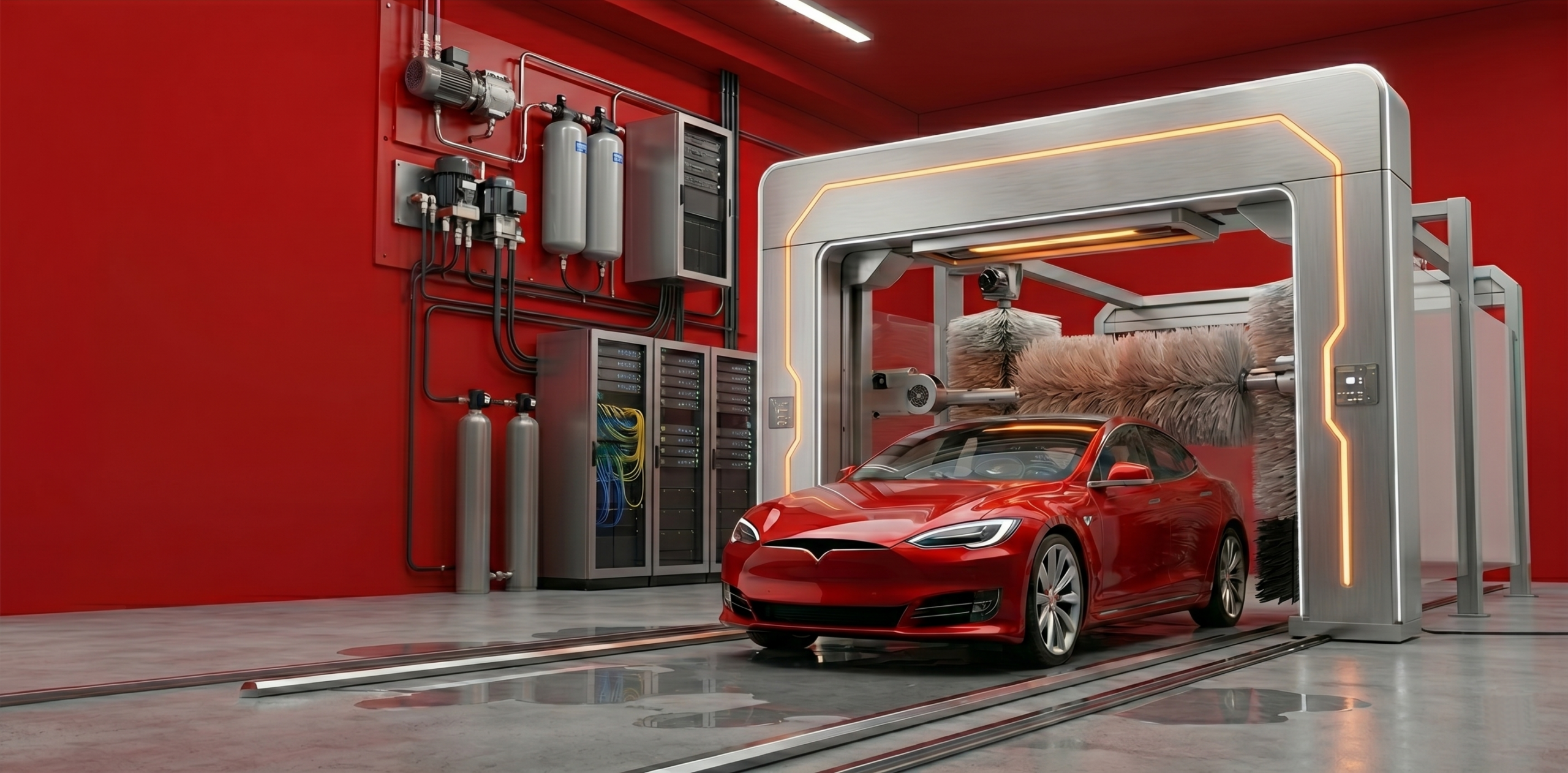
Inventory management in digital car wash platforms works by automatically tracking, monitoring, and replenishing the chemicals, supplies, and consumables your wash operation depends on every day. The platform connects stock levels to wash activity in real time, so you always know what you have, what you are running low on, and what needs to be ordered before operations are disrupted. The sections below break down exactly how each part of this system functions and why it matters for your business.
What supplies and consumables does car wash inventory management track?
Car wash inventory management tracks every consumable that gets used during the wash process, including cleaning chemicals, wax and protectant solutions, tire shine products, rinse aids, drying agents, and foam soaps. It also monitors non-chemical supplies such as brushes, microfiber cloths, water softener salt, and packaging materials used in any retail or detailing services your site offers.
The scope of what gets tracked depends on the complexity of your operation. An express car wash running a fully automated tunnel will have a different consumable profile than a full-service site with detailing bays. Digital platforms are built to accommodate both, allowing operators to configure their inventory catalog to match the exact products in use at their location. This means the system only surfaces data that is relevant to your specific wash format, keeping dashboards clean and actionable rather than cluttered with irrelevant product categories.
Beyond raw chemicals, more sophisticated platforms also track equipment consumables such as replacement nozzles, filter cartridges, and conveyor components that have a predictable service life. Connecting these to wash volume data allows the system to flag when a component is approaching its replacement threshold based on actual usage rather than guesswork.
How does a digital platform monitor stock levels in real time?
A digital car wash platform monitors stock levels in real time by integrating with chemical dosing equipment, flow meters, and IoT sensors installed on tanks and dispensing systems. As each wash cycle runs, the platform records how much of each product was dispensed, deducting that amount from the current stock total automatically and continuously throughout the day.
This live connection between wash activity and inventory data eliminates the need for manual counting. Instead of a team member walking through the chemical room with a clipboard at the end of a shift, the system maintains a running tally that updates with every car that moves through the wash. Operators and managers can view current stock levels from any device, whether they are on site or monitoring operations remotely.
The accuracy of real-time monitoring depends on how tightly the sensors and dosing equipment are calibrated. Well-configured systems can track consumption down to very precise volumes, which is especially valuable for high-cost specialty chemicals where small measurement errors compound into significant waste over time. This level of visibility is one of the clearest operational advantages a car wash lane controller environment gains when it moves from paper-based tracking to a fully connected digital platform.
How does automated reordering work in car wash management software?
Automated reordering in car wash management software works by triggering a purchase order or supplier notification when a product’s stock level falls to a predefined reorder point. You set the threshold for each product during setup, and the system handles the rest, either sending an alert to your purchasing team or, in fully integrated setups, submitting the order directly to your supplier.
The reorder point itself can be static or dynamic. A static threshold triggers at the same stock level every time, regardless of external factors. A dynamic threshold adjusts based on recent wash volume trends, so if your site is heading into a busy period, the system accounts for higher anticipated consumption and reorders earlier than it would during a slower week. This intelligence prevents the situation where a technically adequate stock level runs out faster than expected because demand spiked unexpectedly.
For operators running express car wash locations with high daily throughput, automated reordering is particularly valuable because consumption rates are fast and the margin for error is narrow. A site washing several hundred cars per day can burn through chemical stock quickly, and a missed manual reorder translates directly into downtime or diluted product quality. Automation removes that risk from the equation entirely.
What’s the difference between manual and digital inventory tracking for car washes?
Manual inventory tracking relies on physical counts, handwritten logs, and staff judgment to maintain stock awareness, while digital inventory tracking uses connected sensors, software, and automated data capture to maintain a continuous, accurate record without human intervention at each step. The core difference is reliability: manual systems are only as accurate as the last count, while digital systems update continuously.
Where manual tracking breaks down
Manual tracking introduces errors at every handoff. A staff member may miscalculate a tank level, forget to log a delivery, or simply not have time to complete a count during a busy shift. These gaps accumulate over time, meaning the inventory record drifts further from reality the longer it goes without a full physical audit. For a car wash queue controller environment handling variable daily volumes, this drift can lead to either overstocking, which ties up working capital, or stockouts, which interrupt service.
Where digital tracking adds consistent value
Digital tracking removes the dependency on individual staff behavior. The system records consumption automatically, flags anomalies such as unexpected usage spikes that may indicate a dosing equipment fault, and maintains a historical log that manual systems rarely produce at the same level of detail. This historical data becomes a planning asset, helping operators understand seasonal consumption patterns and make smarter purchasing decisions over time.
How does inventory data connect to car wash profitability?
Inventory data connects to car wash profitability by revealing the true cost of goods per wash, identifying waste, and enabling operators to optimize chemical usage relative to wash volume. When you know exactly how much product each wash cycle consumes, you can calculate your actual cost per vehicle and compare it against your pricing and wash package structure to understand real margins.
Overconsumption is one of the most common hidden costs in car wash operations. Dosing equipment that is slightly out of calibration, or formulations that are mixed at higher concentrations than necessary, can quietly inflate chemical costs without any visible impact on wash quality. Inventory data makes these inefficiencies visible by flagging when consumption per wash drifts above expected benchmarks.
Waste reduction is the other major profitability lever. Spoilage from overstocking, expired products, and over-diluted formulations all represent direct losses. A digital platform that maintains accurate stock levels and triggers timely reorders keeps inventory lean without risking stockouts, which is the balance that protects margins in both directions. Pairing this with car wash marketing automation tools gives operators a more complete picture of both cost and revenue performance.
Can inventory management scale across multiple car wash locations?
Yes, digital inventory management scales across multiple car wash locations by centralizing stock data from all sites into a single management dashboard. Operators and regional managers can view inventory status, consumption rates, and reorder activity across every location simultaneously, without needing to contact individual site managers or wait for manual reports.
Multi-site scalability is one of the most significant advantages digital platforms offer over manual or site-specific systems. For franchise networks and multi-location chains, centralized inventory visibility enables standardization of product usage across all sites, easier supplier negotiations based on consolidated volume, and faster identification of sites that are consuming significantly more or less product than the network average.
Our platform is built with multi-location operations in mind, allowing operators to set location-specific reorder thresholds while still maintaining a consolidated view at the group level. This means a car wash stack controller environment managing a regional network can apply consistent operational standards while still accommodating the individual throughput characteristics of each site. As a network grows, the platform grows with it, adding new locations without requiring a rebuild of the inventory configuration from scratch. Explore our full car wash management solutions to see how inventory fits within the broader platform.
If you are ready to take control of your inventory costs, reduce waste, and build a more efficient operation across one site or many, get in touch with Superoperator and let’s talk through what the right setup looks like for your business.