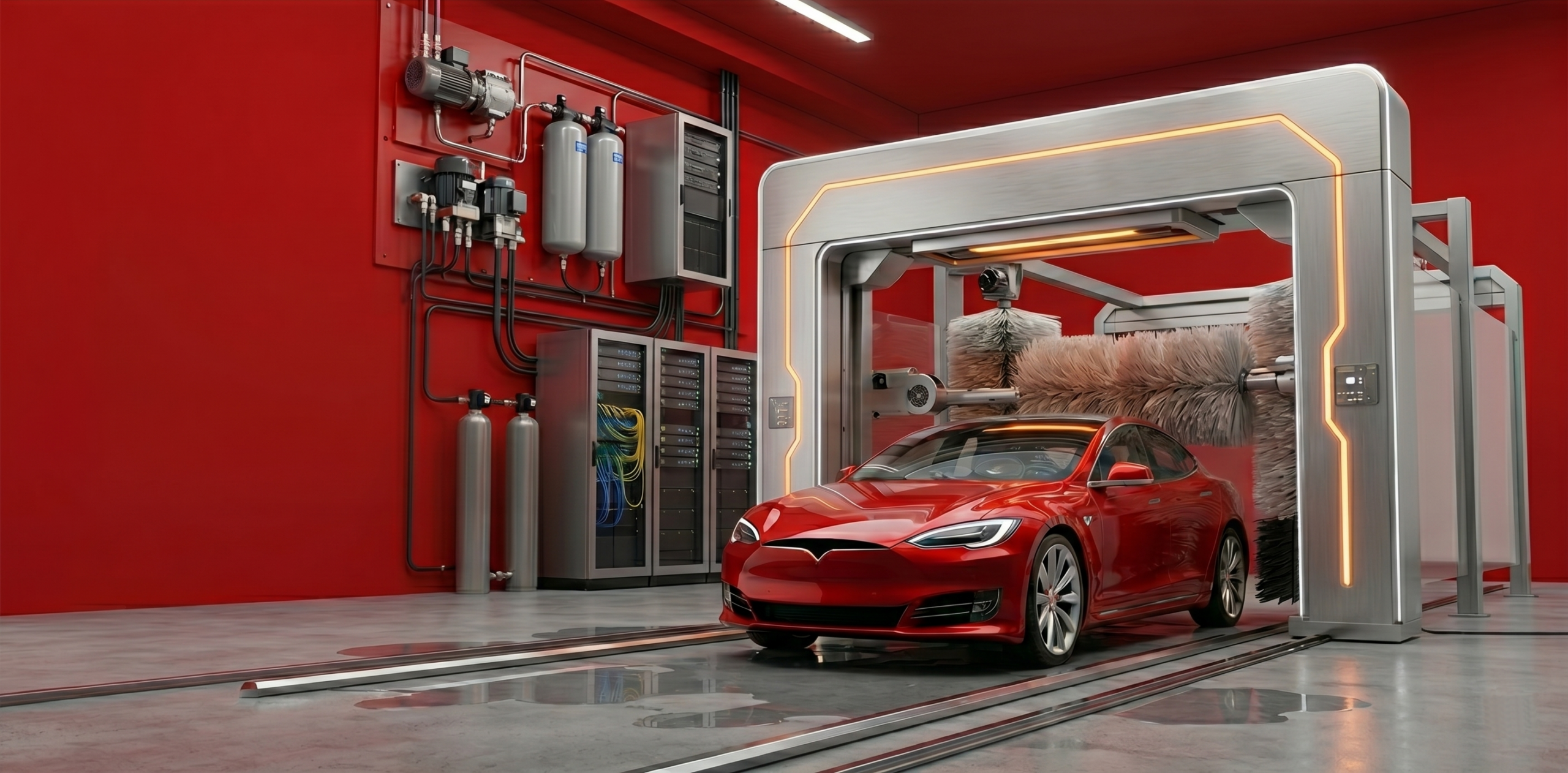
Building a better car wash experience at a petrol station means combining convenience, speed, and smart technology to serve drivers who are already on-site and ready to act. The petrol station environment is uniquely positioned to make car washing effortless: customers are already stopping, already paying, and already in a mindset of vehicle maintenance. The sections below unpack the key questions operators ask when upgrading their forecourt car wash offering.
What makes a petrol station car wash different from a standalone facility?
A petrol station car wash operates as a secondary service within a high-traffic retail environment, which creates both advantages and constraints that standalone facilities do not face. The customer base is largely impulse-driven rather than destination-driven, meaning the car wash must be visible, fast, and frictionless to capture attention during a brief fuel stop.
Standalone car wash facilities can build their entire layout, staffing model, and customer journey around washing vehicles. A forecourt car wash, by contrast, must integrate with fuel pumps, a convenience store, and often a queue of vehicles with limited space. This shapes decisions around equipment footprint, wash cycle duration, and how payment is handled.
The upside is significant. Petrol stations already attract a consistent flow of vehicle owners multiple times per week. A well-positioned car wash system on the forecourt can convert a large share of those visits into wash transactions without requiring any additional marketing effort. The challenge is removing every possible barrier between the driver and the wash.
What do drivers actually want from a car wash at a petrol station?
Drivers visiting a petrol station car wash primarily want speed, reliability, and simplicity. They are not making a dedicated trip to clean their vehicle: they are fitting it into an existing stop, which means any friction, confusion, or delay will push them to skip the wash entirely.
Beyond raw speed, drivers consistently value a few core qualities in a forecourt wash experience:
- Clear pricing with no surprises: drivers want to know what they are getting before they commit
- A wash that actually works: consistent cleaning results build the repeat habit that drives long-term revenue
- Easy payment options: contactless, app-based, or pump-integrated payment removes the need to queue at a till
- Short wait times: if the queue looks long, many drivers will simply leave
- Loyalty rewards: car wash membership and loyalty programmes encourage regular customers to return and choose your site over a competitor
Understanding these priorities helps petrol station operators make smarter decisions about car wash equipment, layout, and digital tools they use to manage the customer experience.
How can petrol stations reduce car wash queues and wait times?
Petrol stations can reduce car wash queues by optimising throughput with faster equipment, pre-booking or pre-payment options, and real-time queue visibility that lets drivers plan their visit. The goal is to eliminate bottlenecks at every stage, from the moment a driver decides to wash to the moment they drive away.
Optimise equipment throughput
The single biggest lever on wait times is the car wash equipment itself. Tunnel systems move more vehicles per hour than rollover units, but they require more space. For sites with a rollover setup, selecting equipment with shorter cycle times and reliable performance reduces the time each vehicle occupies the bay. Regular maintenance is critical here: a machine that stops mid-cycle creates a queue that takes time to clear long after the fault is fixed.
Use digital tools to spread demand
A car washing app or car wash POS system that allows pre-payment and queue management means drivers can commit to a wash before they arrive at the bay, reducing idle time and confusion at the entry point. Some operators display live queue status on forecourt signage, which helps drivers make an informed decision and reduces the frustration of unexpected waits. Spreading peak demand through time-based pricing or loyalty incentives for off-peak visits is another effective approach.
How does bundling a car wash with fuel purchases increase revenue?
Bundling a car wash with a fuel purchase increases revenue by converting a single transaction into two, using the fuel purchase as a natural trigger point for a wash upsell. When the offer is presented at the right moment (at the pump or on the payment screen), conversion rates are significantly higher than when the car wash is marketed separately.
Common bundling models include a discounted wash code printed on the fuel receipt, a pump-integrated offer displayed during fuelling, or a car wash membership that provides unlimited washes as part of a monthly subscription. Each model works differently depending on the site’s customer profile and volume.
The membership model deserves particular attention. Car wash membership schemes create predictable recurring revenue, reduce price sensitivity, and build a loyal customer base that visits more frequently. When a driver holds an active membership, they are far more likely to choose your petrol station over a competitor, even if the fuel price is marginally higher. This makes car wash loyalty programmes one of the most effective revenue tools available to forecourt operators.
What role does digital technology play in modernising the petrol station car wash?
Digital technology modernises the petrol station car wash by automating operations, enabling flexible payment, and giving operators real-time visibility into performance, all of which reduce costs and improve the customer experience simultaneously. A car wash automation system can handle everything from access control and wash selection to loyalty redemption and fault alerts without requiring staff intervention.
A modern car wash computer software platform connects the physical equipment to a cloud-based management layer, allowing operators to monitor uptime, transaction volumes, and customer behaviour across one or multiple sites. This data makes it possible to identify underperforming hours, adjust pricing dynamically, and target loyalty communications to the right customers at the right time.
We work with petrol station operators to implement exactly this kind of end-to-end digital infrastructure. Our platform connects the car wash system to a mobile app, a cloud management dashboard, and a car wash POS system, giving operators a single view of their forecourt car wash operation without the complexity of managing multiple disconnected tools.
For multi-site operators or car wash chains, carwash software that centralises reporting and automates marketing across locations is particularly valuable. It removes the need to manually consolidate data and makes it far easier to roll out promotions, pricing changes, or loyalty campaigns across the entire network at once.
What are the most common car wash problems at petrol stations and how are they fixed?
The most common car wash problems at petrol stations are equipment downtime, payment friction, inconsistent wash quality, and low customer awareness of the service. Each of these has a practical solution, and most can be addressed with a combination of better equipment maintenance and smarter digital tools.
Equipment downtime
Unplanned downtime is the most damaging problem a forecourt car wash can face. A machine that is out of service during peak hours loses revenue and erodes customer trust. The fix is a combination of preventive maintenance schedules and remote monitoring through a car wash automation system that sends alerts the moment a fault is detected. Operators who can respond to issues quickly, or even predict them before they cause a stoppage, protect both revenue and reputation.
Payment friction and access issues
Drivers who cannot easily pay or access the wash will simply leave. Outdated car wash solutions that require exact change, a separate till visit, or a paper token create unnecessary barriers. Upgrading to a car wash POS system that accepts contactless payment, QR codes, or app-based access removes these friction points entirely. For sites with car wash membership programmes, seamless RFID or app-based entry means members never have to interact with a payment terminal at all.
Low customer awareness
Many petrol station car washes underperform not because of equipment or technology issues but because drivers simply do not notice the service is available. Clear forecourt signage, pump-integrated prompts, and a car washing app that sends push notifications to nearby members all help ensure the wash is front of mind at the moment a driver is most likely to act.